The following was my 2024 entry for the Anthony Burgess Prize…
The conclusion to Ronan Bennet’s sprawling crime drama Top Boy is abrupt, unsatisfying, and raises many more questions than it answers – which is what makes it perfect.
That Netflix wanted the show to “carry on forever”, according to its lead Ashley Walters, is unsurprising. Yet, in the era of reboots, remakes, sequels, and prequels, the cliffhanger ending which kills off a member of the main cast with no clarity as to the culprit, is a text-book example of one of entertainment’s now oft-neglected golden rules: always leave the audience wanting more.
Even Top Boy’s surviving characters are left miserable. Like the world it portrays, the show offers no reassurance of justice. There is no coda or closure. The only certainty is that crime, however much it pays, also bears a high cost.
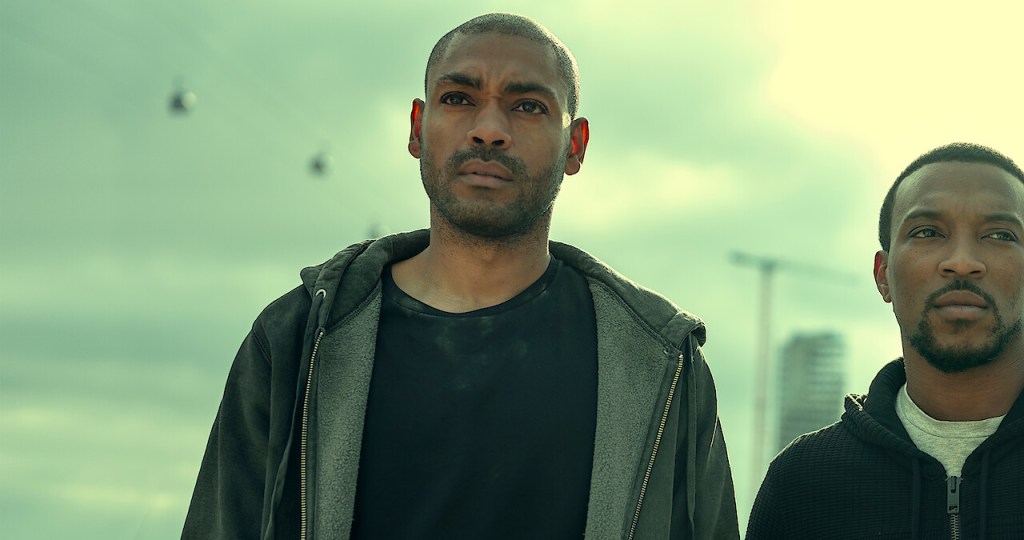
Top Boy takes place on the fictional Summerhouse estate in the London Borough of Hackney. It focuses on two drug dealers, Dushane (Walters) and Sully (Kane Robinson, better known as the grime artist Kano).
The first two series aired on Channel 4 between 2011 and 2013 before the show was unceremoniously dropped. Following investment from the Canadian rapper Drake, who served as an executive producer, the third and fourth series aired on Netflix in 2019 and 2022 respectively. These were presented as instalments of an original Netflix production. The Channel 4 run was added to the platform under the name Top Boy: Summerhouse. The final series aired on Netflix in 2023.
Diving into the politics of austerity, immigration and even planning permission, Top Boy is one of the most polemical TV programmes of the past 20 years. It is paradoxically themed by both self-preservation and an unerring sense of community.
Gang life is never really glamourised – Dushane yearns for his impossible retirement – but it is hard to not be moved by how Top Boy depicts different crews’ close friendships. As the recently fostered Stefan (Araloyin Oshunremi) struggles with the grief of losing most of his family, he is comforted by the ZTs, his late brother’s former gang.
Top Boy’s criminals have a strict code of conduct, while family values and manners still matter. In the final series’ best episode, Birthday Party, as Dushane and Sully prepare to assassinate members of a rival gang in a nursing home, they don’t neglect to call an elderly woman “auntie” along their way.
It’s the sort of detail that signposts Top Boy’s characters as three-dimensional. Dushane, Sully, and many of their associates are bad people. It would be a stretch to root for them, but Top Boy highlights just enough chinks in their armour that it succeeds in making viewers feel sorry for them when something goes wrong. Sully is simultaneously a sociopath and a loving father who wants his daughter to be able to study whatever she wants.
Top Boy’s final series is peppered with incredible acting from both its main and supporting cast. Jasmine Jobson, who plays Jaq, the Summerhouse gang’s fierce, female lieutenant, who has a crisis of conscience, can feel hard done by to have not won the BAFTA she was nominated for.
Simbiatu Ajikawo, better known as the rapper Little Simz, shines as Shelley, Dushane’s ambitious yet honest girlfriend who aspires to be much more than married to the mob. Barry Keoghan also impresses with his skincrawling turn as Jonny, the terrifying Irish enforcer, whose whimsical, cheeky-chappy persona is poor cover for his bloodlust.
Top Boy is believable. The violence is not overly choreographed, with the show favouring sudden, one-shot kills over confrontations with drawn out dialogue.
It is also relatable and, at times, funny. In the first Netflix series, for example, Dushane winces over the price of coffee in increasingly gentrified Hackney. Told that the £3.50 roast of the day is a blend from Mexico, Brazil, and Uganda with a velvety, smooth texture, he wearily replies: “Fine.”
Top Boy has always been good. The transition to Netflix made it great, while thrusting it firmly into the mainstream. It has gripped a range of audiences – Samuel L Jackson and Louis Theroux are fans – and offered an invaluable insight into the language, culture, and psychology of gang life.
Too much of how crime is reported focuses on the what and the how. Top Boy is a refreshing attempt to understand the why.
Nevertheless, the show’s cut-to-black close is bound to sting. After 32 episodes of high-stakes storytelling, viewers became invested in these characters, but to be fair, how could such an unhappy start lead to a happy ending?
When it comes to dealing drugs, the show is unequivocal: there are no winners, only degrees of loss. Indeed, as one iconic Sully line notes: “Just because we didn’t lose,doesn’t mean we won.”
 Rohan Banerjee